

- Perspectives
The problem: a dollar that won't sit still
The Australian dollar has had one of its strongest starts to a calendar year, driven by the RBA's March 2026 rate hike to 4.10%, monetary policy divergence with the US Fed and improved sentiment around China's economic trajectory.
At the same time, the US dollar is under structural pressure. Institutional investors had already built substantial short USD positions entering 2026, and skepticism around the Fed's near-term policy path has compounded the move.
The result: AUD/USD volatility is elevated and the risk of reversals is also real.
For Australian companies with material USD exposure, whether that is characterised as a substantial customer base in the US dictating revenue, USD-denominated debt, or import costs priced in US dollars, this environment creates headaches for finance teams given the real impact it has on margins.
Why this cycle is different
Previous AUD strength cycles were often mostly commodity-driven. Albeit commodities are still involved, this cycle has more structural legs.
The RBA's hawkish stance, increasing rates while the Fed holds creates an advantage for the AUD and attracts sustained international capital flows. Speculative positioning has flipped from net short to net long on the AUD. And with uranium prices hitting triple digits US dollar territory for the first time since early 2024, commodity tailwinds are reinforcing the move.
Amid the volatility, the RBA's analysis of April 2025 FX market activity suggests Australian companies are taking a more strategic, longer-horizon approach to currency risk management. A decade long preference for forwards over swaps indicates companies are hedging further out on the curve. Meanwhile, the 108% rise in currency options turnover points to growing sophistication, with companies increasingly preserving flexibility during uncertain periods rather than simply locking in rates.
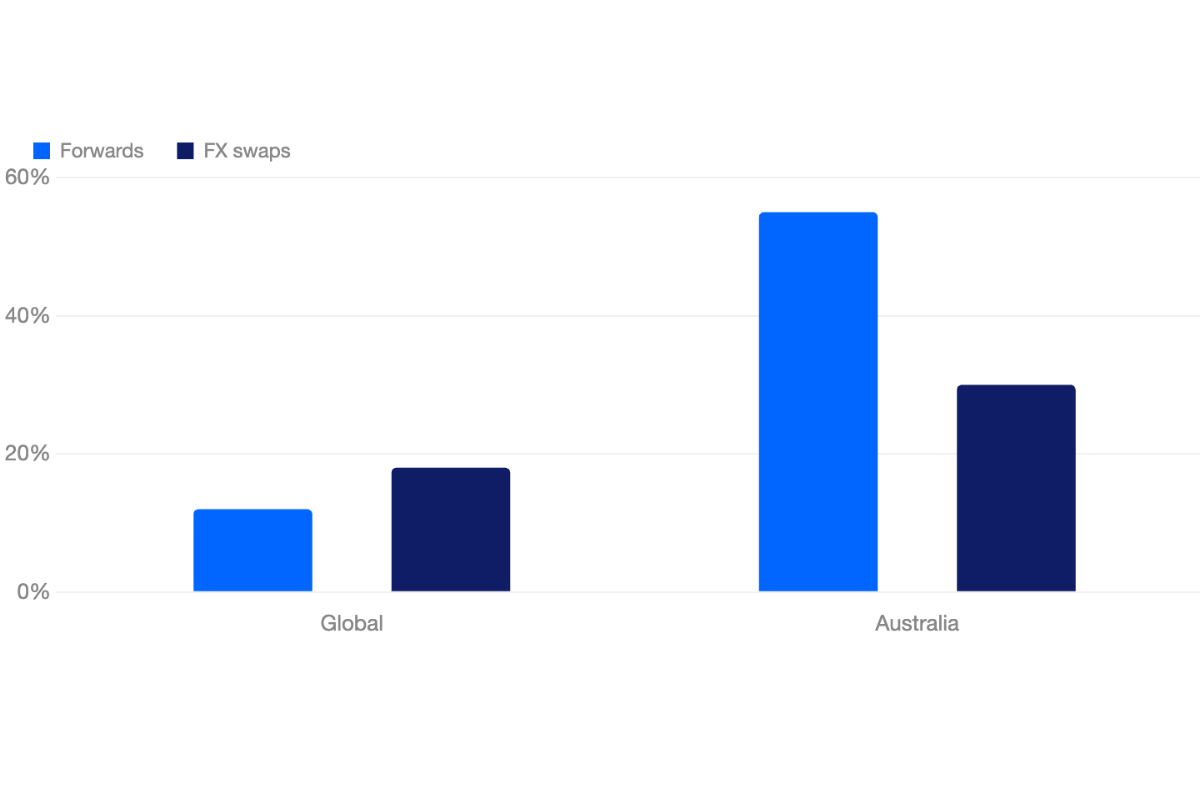
Source: BIS, RBA
The structural change in the Australian market is showing that companies are considering currency risk as a longer term play.
“The expectation of me to get FX and treasury right is now greater than ever. I know it’s important, but it chews up so much valuable time.”
Nick Barnes, CFO Karma Drinks
Four questions to inform your hedging strategy
Every Australian business with foreign currency exposure needs an FX strategy. Working with CFOs every day, these are the questions we ask to formulate the best approach that fits their organisational needs:
What is your margin and how does FX impact the bottom line?
Start by asking what your actual currency exposure looks like and how much it impacts your bottom line. The more revealing question is whether your gross profit margin is consistent throughout the year despite FX volatility. If it is impacted, then considered FX strategy is required. Thinner margins with meaningful exposure demand a more urgent, structured response, as small moves can directly threaten viability. Healthier margins provide more buffer, but high exposure can erode that cushion quickly and complacency is a risk. In both cases, building automation and efficiency into the strategy ensures margins are protected consistently.
Can you reprice your way out of it?
If you can pass FX-driven cost increases on to customers, through levers such as dynamic pricing, market leadership, or contract flexibility, the intensity of hedging required is lower. If you're locked into fixed contracts or a hyper-competitive market, protecting margins through active hedging becomes much more important. Either way, understanding your repricing flexibility will help inform your pricing strategy, but also create opportunities for competitive advantage. A well-timed FX gain, for instance, might mean you can hold pricing while competitors are forced to pass cost increases on to customers which is a meaningful edge in a tight market.
Can you net-off your FX flow?
Before reaching for financial instruments, identify what's already working in your favour. Key examples of this are revenues and costs in the same currency or AUD billing you've negotiated with overseas counterparties (if your cost base is also predominantly in AUD). Where natural hedges exist, financial hedging can be lighter and more targeted. Where they don't, a more comprehensive program is typically needed to fill the gap.
How important is FX strategy to your business?
Not every company’s FX needs are the same. Depending on margin impact, price elasticity and the ability to naturally hedge, the strategy, advice and relationship with your FX provider will be more important for some businesses than others.
If your FX need is material, and can’t be controlled through other commercial means, the question of when to hedge, how much and over what period, will be more impactful than a few pips off your spot execution.
Executing a proactive FX strategy with Primary
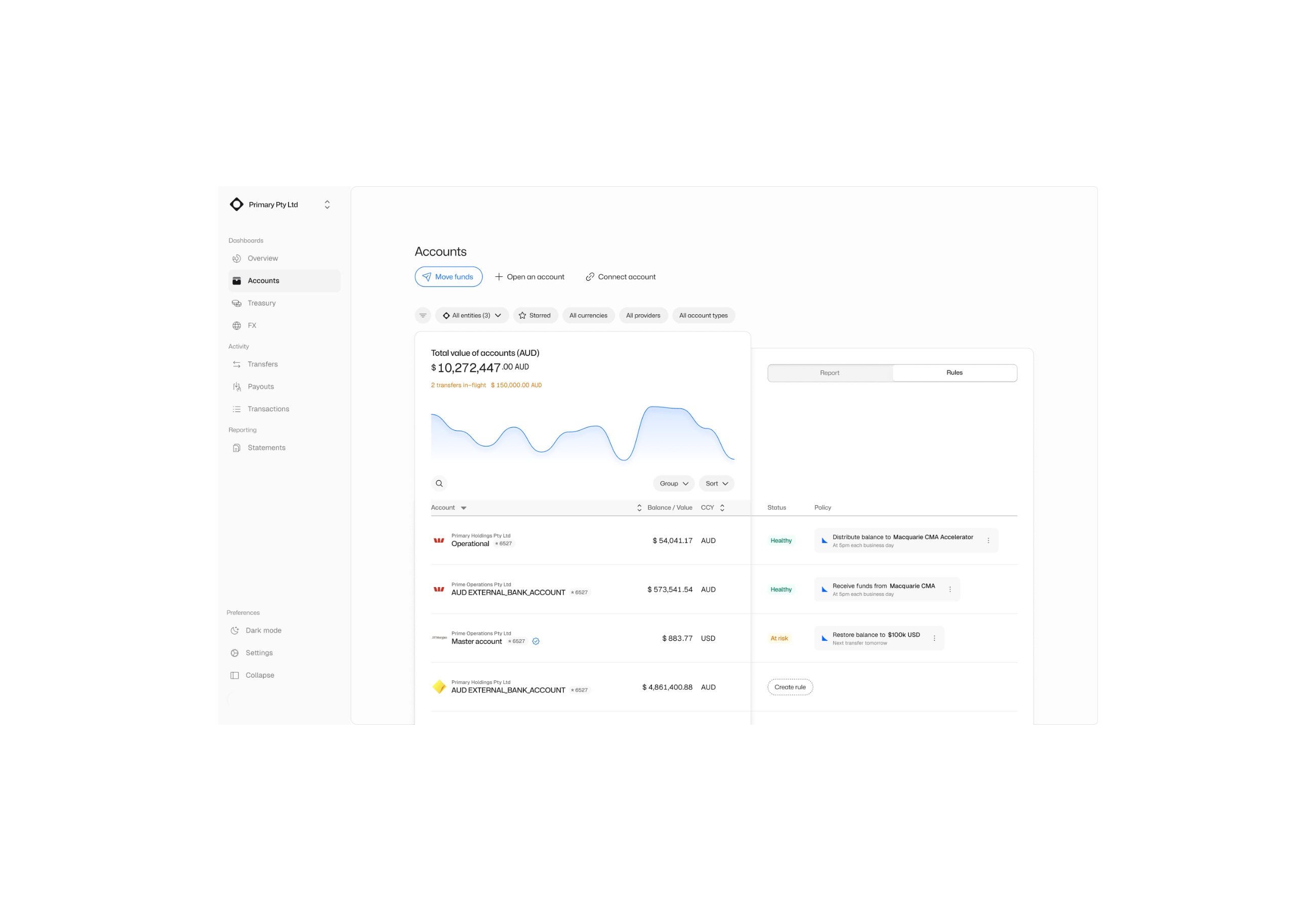
Real-time cash visibility
Primary's platform connects your multi-currency accounts into a single, consolidated view. You can see your currency holdings, live exposure across pairs, and how your positions have moved relative to your base currency, all through one dashboard.
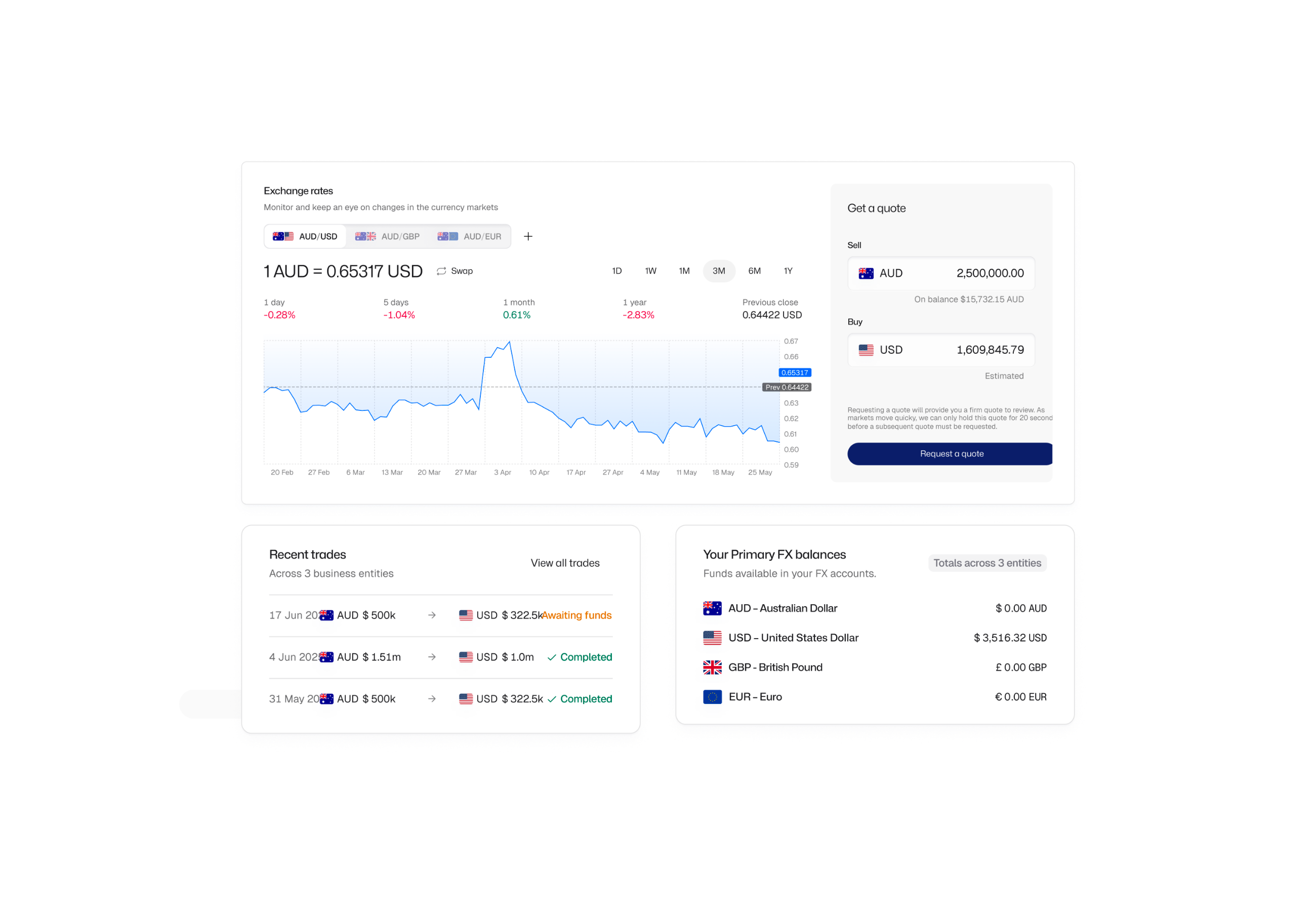
Hedge directly in platform
Once you understand your exposure, Primary allows you to act on it. Execute forwards and manage open positions directly within the platform, against a budget rate and on a timeline that reflects your actual cash flow forecast.
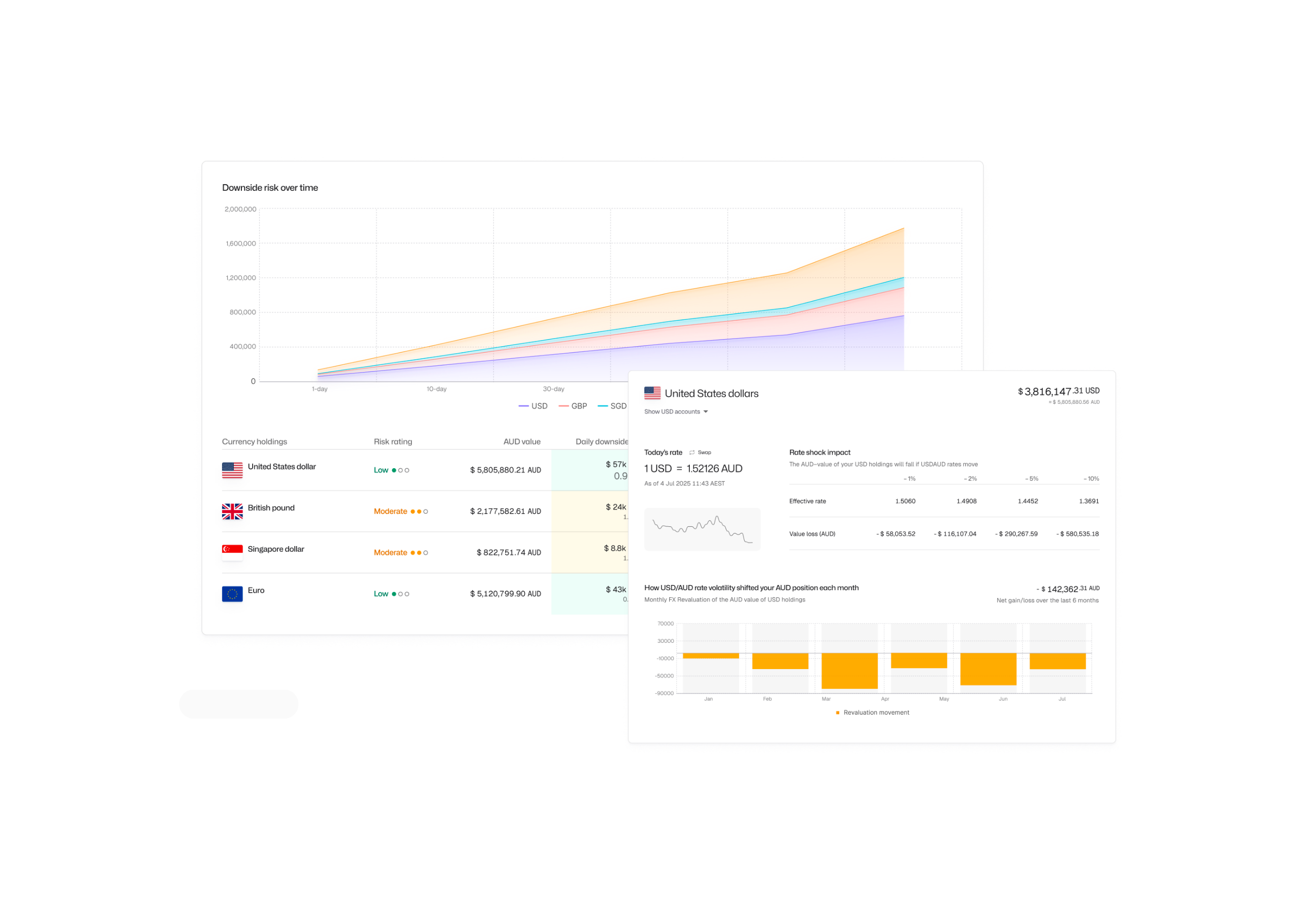
Dedicated FX strategy support
Behind the platform is a team available to work through your hedging strategy with you, providing guidance on an appropriate strategy that will match your exposure profile.
The bottom line
Currency volatility is only becoming more prevalent, so the question for modern organisations is no longer whether to implement an FX strategy, but how to implement the most effective one. The advantage of operating in today's technology landscape is that visibility and execution tools are readily available, empowering CFOs to build strategies that run seamlessly in the background. The companies staying competitive are those investing in tools that reduce manual workload and free their finance teams to focus on higher-value work.